Small kitchens have a way of making you feel squeezed. You open the oven, and the drawer is in the way. You reach for a pan and bump a cabinet.
You cannot move a wall. But you can change how big the room feels. Colour is the cheapest way to do it. The right mix lifts the room, opens the space and calms the whole scene.
This guide shows you which colours to pair, where dark shades belong, and how to use blue and grey without shrinking the room.
Small Kitchen Colour Combinations at a Glance
To make a small kitchen feel bigger, start with light. White, cream and soft neutrals reflect light and open the room. Keep the palette tonal, so the eye does not stop at harsh lines, and let hardware, lighting and floors add the contrast. Light blue and soft grey make a lovely pair for a small space, because they feel airy and calm. Use dark colours in small doses, such as navy on the lower cabinets or a charcoal accent, and keep the upper cabinets pale. Add shine in a few places to bounce light around. Keep the materials few and the counters clear. Last, test your colours in your own light first, because a shade that looks big in a shop can look heavy at home.
Start With Light Colours That Bounce Light
Designers agree on one thing. White is the safest way to make a small kitchen feel bigger, with beige and cream close behind. That is the view in Homes & Gardens’ guide to colours that make a kitchen look bigger. These shades reflect light, so the room feels wider and airier. Light floors help for the same reason.
Not all whites behave the same. In a kitchen with little daylight, stark white can feel cold. In a second piece on small kitchen colour pairings, designer Victoria Forehan prefers whites with warm undertones over cool grey whites when light is limited. Warm stone or timber can add warmth too.
Keep the Palette Tonal and Let Details Add Contrast
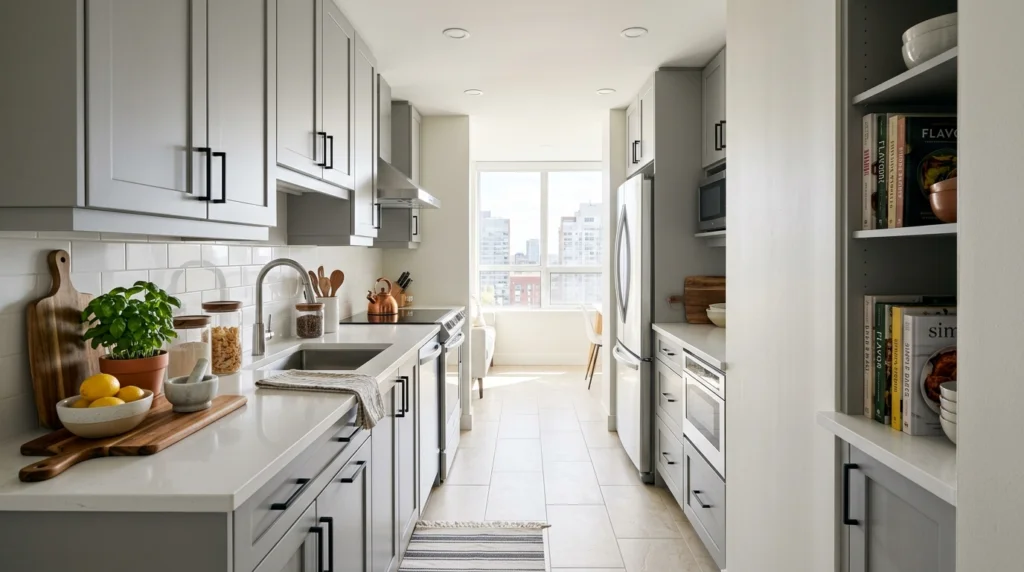
A tonal palette uses colours that sit close together. There are no sharp jumps from dark to light. The pairings article says a continuous palette with few abrupt shifts makes a small kitchen feel larger. Designer Tom Stringer calls one version of this colour drenching, where walls, trim and cabinets blend into one calm block.
That does not mean zero contrast. Small kitchens can handle it. The designers say it works best through hardware, lighting or darker flooring, not through sharp splits between cabinets and walls. Too many dark to light jumps make a room feel choppy and tighter.
Use Soft Blue and Light Grey for an Airy Look
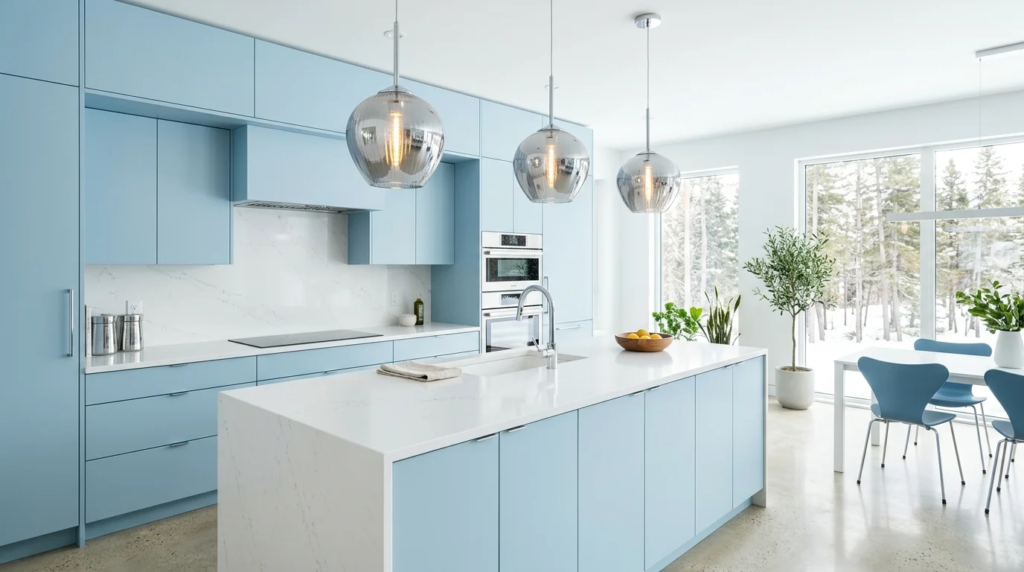
Blue and grey sound heavy. In the right shades, they are not. Light blue with soft grey feels fresh and quiet, and the pairings article describes pale and blue grey tones as calming. Sherwin-Williams notes that cool greys suit rooms with plenty of light, so save them for bright kitchens.
Add a white counter and chrome or nickel hardware for a crisp finish. Keep your whites and greys on the same temperature. A cool grey stone can make warm cream cabinets look flat.
If you want more blue and grey kitchen ideas, including a section on small rooms, this guide is a good next read.
Use Dark Colours in Small Doses
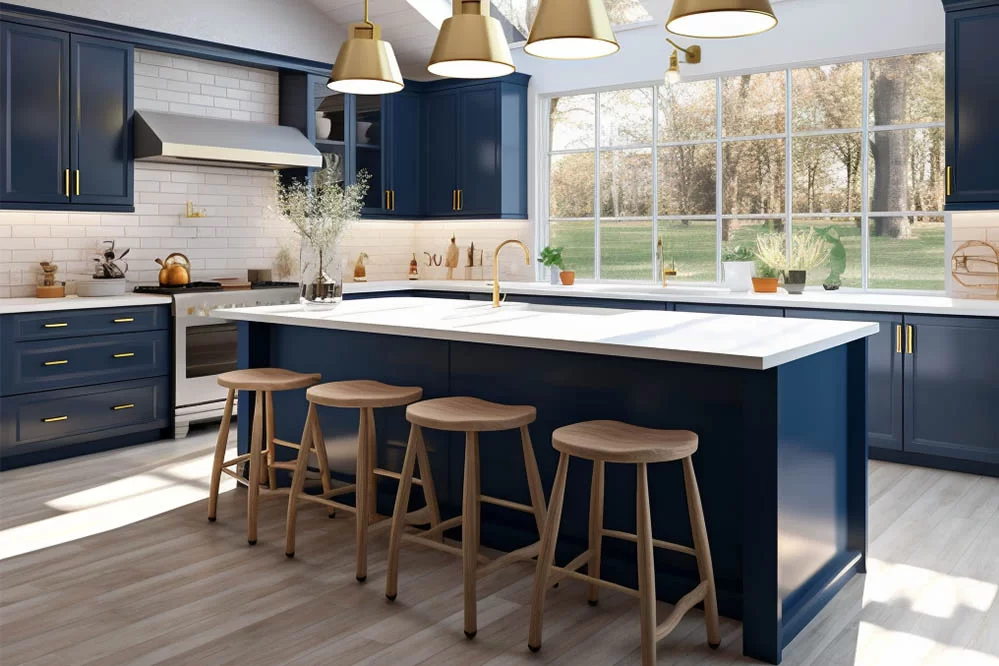
Dark colours are not banned. They just need a plan. The pairings article says pale upper cabinets or open shelves cut visual weight, while darker lower cabinets ground the room. So navy below and light grey above can work well.
Go easy in a narrow galley. The same article warns that deep navy may feel heavy there. Pick a lighter blue, or keep navy to one wall or an island.
A touch of black or charcoal can help too. In the bigger kitchen guide, designer Kelly Taylor uses black or charcoal accents, such as honed black granite, for contrast, and says it can make a kitchen look far bigger than it is.
Pick Finishes and Lighting That Bounce Light
Shine helps. The bigger kitchen guide describes high gloss white cabinets and reflective silver tiles that throw light around the room. Gloss shows fingerprints more, so use it in a few spots, not everywhere.
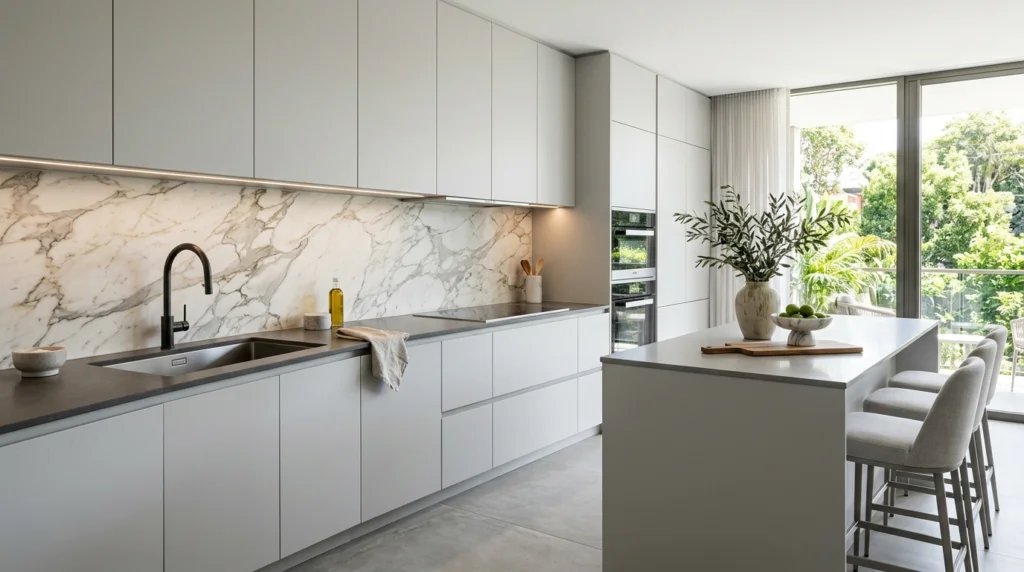
Natural light matters, too. Designer Massimo Buster Minale says stone surfaces that work with daylight can make a kitchen feel larger and airier. A full height backsplash in a light stone look also pulls the eye up.
Layer your lights. Add lights under the wall cabinets for the counter, a ceiling light for the room and, if there is space, one small pendant. Use bulbs of the same warmth, such as 2700K to 3000K, so the colours stay true.
Edit Your Materials and Patterns
In a small room, fewer things should fight for attention. Designer Linda Eyles notes that in a galley kitchen the mix needs to be much more edited. Use fewer competing materials and patterns.
A simple rule helps. Choose one pattern, two main materials and one metal. Then keep your counters clear. A clear counter is one of the cheapest ways to add space.
Three Palette Recipes to Copy
These are starter ideas, not strict rules. Mix and adjust them for your own room.
| Recipe | Cabinets | Walls and counters | Finishing touch |
| Airy and fresh | Light blue | White walls and a white counter | Chrome or nickel hardware |
| Cosy and smart | Navy below, light grey above | Warm white walls and light stone | Brass hardware and a timber board |
| Soft and quiet | Soft grey | Warm white walls and a pale counter | Black handles and one plant |
Test Your Colours Before You Commit
A shade that looks big in a shop can look heavy at home. Try this simple test:
- Put large samples on two walls and on a cabinet door or a board.
- Look at them in the morning, at midday and at night with the lights on.
- Place your floor, counter and hardware samples next to them.
- Live with them for a few days before you decide.
If you are ordering new cabinets, ask a factory direct maker such as Parlunbuilding for a small door sample in your chosen colour, so you can check it in your own light.
Small Kitchen Colour FAQs
What Colours Make a Small Kitchen Look Bigger
Light neutrals do the most work. White, cream and beige reflect light and make the room feel open. Light floors help too. Add contrast through hardware, lighting or a small dark accent.
Should Small Kitchen Cabinets Be Light or Dark
Light cabinets are the safe choice because they reflect light. Dark cabinets can work in small doses. Try pale upper cabinets with darker lower cabinets, so the room stays light but grounded.
Can You Use Navy Blue in a Small Kitchen
Yes, if you use it with care. Put navy on the lower cabinets or an island, and keep the rest light. In a very narrow galley, deep navy can feel heavy, so a lighter blue may suit better.
Does Grey Make a Small Kitchen Look Smaller
Not always. Light, soft greys can look fresh and open. Cool grey whites can feel cold when daylight is low, and cool greys suit bright rooms best. Match the grey to your light and your other materials.
Final Thoughts on Making a Small Kitchen Feel Bigger
You do not need to knock down a wall to gain space. You need light shades, a few smart details and a good test. Choose your palette, try the samples, and watch the room open up.